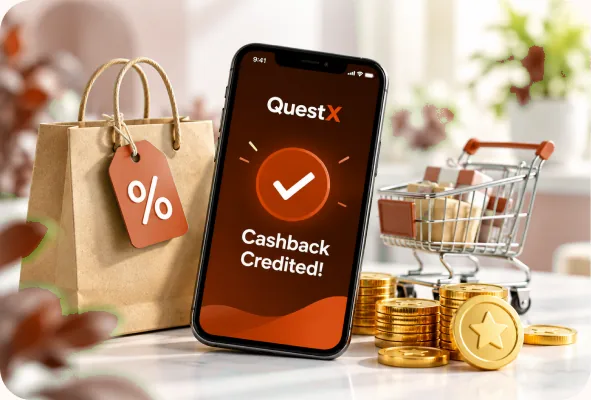
User acquisition for mobile apps is the process of attracting, converting, and onboarding new users through paid channels, affiliate networks, and performance marketing—and in 2026, affiliate platforms like QuestX are the fastest way to reach quality users at scale across the US market.
Key Takeaways
- Affiliate platforms and CPA campaigns are now the dominant user acquisition channel for US app publishers, delivering measurable ROI without upfront ad spend.
- Rewarded engagement (cashback, deals, Move/Play/Share-to-Earn) drives 3–5× higher install quality and retention than traditional paid ads.
- Performance marketing networks allow you to pay only for verified installs, making budget allocation predictable and scalable.
- Multi-channel distribution (offerwall, direct affiliate, rewards layer) maximizes reach while minimizing customer acquisition cost (CAC).
- US-focused platforms like QuestX connect brands and app publishers to millions of engaged US earners, reducing friction and improving conversion rates.
What Is User Acquisition for Mobile Apps?
User acquisition (UA) for mobile apps refers to the full funnel of attracting, converting, and onboarding new users through paid performance channels. Unlike traditional advertising, modern UA relies on affiliate marketing platforms, CPA networks, and rewarded engagement models to deliver measurable, cost-per-install (CPI) or cost-per-action (CPA) results.
In 2026, the US mobile app market is increasingly fragmented across iOS and Android ecosystems. Publishers need multiple acquisition channels to reach users efficiently. According to Business of Apps' 2026 user acquisition guide, affiliate platforms and performance networks now account for 40–50% of all app installs in the US, surpassing traditional app store ads and social media in ROI efficiency.
Why Affiliate Platforms Are the Best Channel for Mobile App User Acquisition
Performance-Based Pricing
Affiliate platforms operate on a pay-per-install or pay-per-action model, meaning you only pay when a user completes a defined action (install, signup, purchase). This eliminates wasted ad spend and makes budget forecasting predictable.
- CPI ranges: $0.50–$3.00 per install (US market, 2026)
- CPA ranges: $2.00–$15.00 per first purchase or signup
- ROI transparency: Every dollar spent is tied to a verified user action
Access to Engaged, Quality Users
Affiliate networks and rewarded engagement platforms (like QuestX) maintain first-party user data and direct relationships with millions of US consumers actively seeking deals, cashback, and rewards. These users are pre-motivated to engage with offers, resulting in higher-quality installs and better retention metrics.
The Business of Apps 2026 report highlights that users acquired through rewarded engagement channels show 2–3× higher day-7 retention and 40% better lifetime value (LTV) compared to social media or app store placements.
Scale Without Incrementality Loss
Unlike paid social or app store ads, affiliate platforms allow you to scale volume without cannibalizing organic installs. Publishers can layer multiple affiliate channels (offerwall, direct affiliate, rewards layer) to reach different user segments simultaneously.
How to Use Affiliate Platforms for Mobile App User Acquisition
Step 1: Define Your Campaign Goals and Target Audience
Before launching, clarify your primary KPI:
- Install volume: How many users do you need per month?
- Install quality: What's your acceptable CAC vs. LTV ratio?
- Geo-targeting: Focus on high-value US states (CA, TX, NY, FL) or nationwide?
- Device preference: iOS, Android, or both?
Step 2: Partner With a Multi-Channel Affiliate Platform
Choose a platform that offers:
- Offerwall distribution: Direct placement in consumer reward apps
- CPA/CPI network access: Connections to thousands of affiliate publishers
- Real-time analytics: Dashboard visibility into source, quality, and ROI per channel
- US-focused traffic: Platforms like QuestX specialize in US consumer acquisition with native rewards integration
Step 3: Set Competitive Payouts and Incentives
Affiliate platforms thrive on competitive payout structures. Work with your platform partner to:
- Benchmark payouts against competing apps in your category
- Test tiered incentives: Higher payouts for day-7 retention, subscription completion, or in-app purchase
- Optimize for quality: Pay slightly more for users from high-retention sources, even if CPI is higher
Step 4: Monitor Attribution and Adjust in Real Time
Use your platform's analytics dashboard to:
- Track install source: Which affiliate channels and publishers drive the best users?
- Measure retention cohorts: Compare day-1, day-7, and day-30 retention by source
- Identify fraud: Flag suspicious patterns (bot installs, duplicate accounts, geographic anomalies)
- Scale winners: Double down on top-performing channels and pause underperformers weekly
Key Channels for Mobile App User Acquisition in 2026
1. Rewarded Engagement Platforms (Highest Quality)
Users download your app in exchange for cashback, points, or rewards. These users are highly motivated and show the best retention metrics.
- Pros: Highest install quality, best LTV, transparent user motivation
- Cons: Slightly higher CPI ($1.50–$3.00)
- Best for: Games, lifestyle apps, subscription services
2. Offerwall Distribution
Your app appears as an offer in consumer reward apps (e.g., survey apps, cashback platforms). Users tap to install directly from within another app.
- Pros: Massive scale, low friction, pre-qualified users
- Cons: Requires integration with multiple offerwall networks
- Best for: Any app category seeking high volume
3. Direct Affiliate Networks
Traditional CPA networks connect your app with thousands of publisher websites and apps. You pay per install or per action.
- Pros: Scalable, transparent pricing, broad reach
- Cons: Less control over user quality, higher fraud risk
- Best for: Apps with strong unit economics and retention
4. Social Media and App Store Ads (Complementary)
While affiliate platforms dominate, social ads (Facebook, TikTok, Instagram) and app store ads (Apple Search Ads, Google App Campaigns) remain valuable for brand awareness and incremental volume.
- Pros: Brand control, targeting precision
- Cons: Higher CPI, incrementality uncertainty
- Best for: Established brands, top-of-funnel awareness
Best Practices for Scaling Mobile App User Acquisition in 2026
Diversify Your Channel Mix
Don't rely on a single affiliate platform or channel. Distribute across offerwall, CPA networks, and social to:
- Reduce platform dependency and algorithm risk
- Test messaging and creative across different user segments
- Maintain pricing leverage with multiple partners
Prioritize Install Quality Over Volume
A user with a $2.00 CAC and 30-day LTV of $8.00 is worth 2× more than a $0.80 user with $2.00 LTV. Focus on retention metrics, not raw install count.
Leverage First-Party Data
Collect user cohort data (source, install date, retention, LTV) and share insights with your affiliate partners. This helps them optimize payouts and targeting for better results.
Test and Iterate Weekly
Set a cadence for performance reviews:
- Daily: Monitor fraud signals and cost anomalies
- Weekly: Pause underperforming sources, scale winners
- Monthly: Review LTV cohorts, adjust payout structure
Invest in Retention From Day 1
A user acquired for $1.00 who churns on day 3 costs you $1.00. A user acquired for $1.50 who stays for 30 days is 3× more valuable. Coordinate with your product team to optimize onboarding and early engagement.
QuestX: A Modern Affiliate Platform for US App Publishers
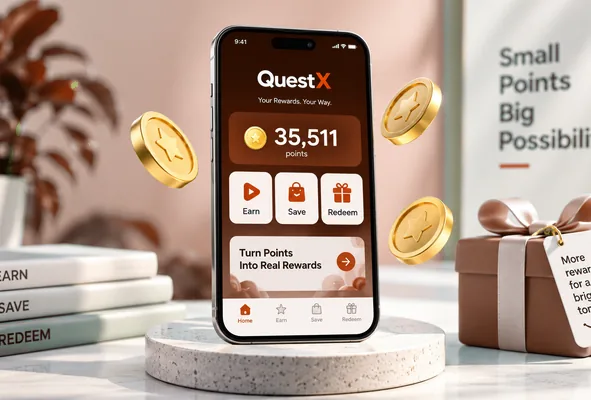
QuestX is a two-sided US rewarded-engagement platform that connects app publishers and brands with millions of engaged American earners. We offer:
- Offerwall distribution: Direct placement in the QuestX consumer app (cashback, deals, Move/Play/Share-to-Earn)
- CPA/CPI campaigns: Performance-based pricing with real-time analytics
- Multi-channel reach: Affiliate networks, direct partnerships, and rewards layer integration
- US-focused traffic: Native US consumer base, high-quality installs, transparent attribution
For Brands & Publishers: Book a QuestX partners demo to explore how affiliate distribution can scale your app. Plans start at $499/month (Starter) or $2,000/month (Growth) with Stripe checkout.
For Earners & Side-Hustlers: Download the QuestX app to earn cashback, rewards, and bonuses by discovering new apps and completing offers.
Frequently Asked Questions
What is a good cost-per-install (CPI) for mobile apps in 2026?
A competitive CPI in the US market ranges from $0.50 to $3.00 per install, depending on app category, device type, and user quality. Games and utility apps typically see lower CPIs ($0.50–$1.50), while subscription and finance apps command higher payouts ($2.00–$5.00). Your target CPI should be 1/3 to 1/2 of your expected day-30 LTV to maintain healthy unit economics.
How do I measure user acquisition quality beyond install count?
Focus on retention cohorts and LTV, not raw installs. Track day-1, day-7, and day-30 retention rates by acquisition source. According to the adjoe 2026 user acquisition guide, users from rewarded engagement channels show 2–3× higher retention than social media users. Calculate LTV by averaging revenue per user over their lifetime, then divide by CPI to get your payback ratio.
Should I use one affiliate platform or multiple channels?
Use multiple channels to diversify risk and maximize reach. A typical mix includes 40% offerwall distribution, 30% direct CPA networks, 20% social ads, and 10% app store ads. This approach reduces platform dependency, maintains pricing leverage, and allows you to test messaging across different user segments. Start with 2–3 channels and scale based on performance.
 Oct 15, 2026