A user acquisition platform is a software solution that combines AI-powered targeting, multi-channel distribution, and real-time analytics to help US brands and app publishers attract quality users at scale. According to Business of Apps' 2026 analysis, apps using AI-powered mobile user acquisition strategies demonstrated 143% higher user growth compared to traditional methods.
Key Takeaways
- AI-driven targeting is now table stakes: Apps implementing AI-powered mobile user acquisition strategies showed 143% higher user growth versus non-AI competitors in 2025.
- Multi-channel distribution (offerwall, CPA networks, affiliate, rewarded video) reduces user acquisition cost (UAC) by 25–40% versus single-channel campaigns.
- Real-time ROAS optimization lets marketers adjust bids and creatives within hours, not days, improving ROI by an average of 31% in Q4 2025.
- Compliance and fraud prevention are critical: 18–22% of mobile installs are fraudulent without proper vetting, costing US brands $2.1B annually.
- Hybrid earn-to-play models (cashback, rewards, Move-to-Earn) are now driving 34% of user retention for gaming and lifestyle apps in the US market.
What Is a User Acquisition Platform?
A user acquisition platform (UAP) is an end-to-end software suite that helps marketers, affiliate managers, and app publishers acquire, track, and monetize users across multiple channels. Unlike traditional ad networks, modern UAPs integrate:
- Performance marketing campaigns (CPA, CPL, CPI).
- Offerwall and rewards-layer distribution for seamless user onboarding.
- Real-time attribution and analytics to measure ROAS, LTV, and retention.
- Fraud detection and compliance tools to protect brand reputation.
- Consumer earn apps that incentivize sharing, referrals, and engagement.
According to the Definitive Mobile User Acquisition Guide 2026 by adjoe, the best platforms now combine machine learning for audience segmentation with direct access to premium publisher inventory, enabling US brands to scale quality users 2–3x faster than 2024 benchmarks.
How Much Does User Acquisition Cost in 2026?
User acquisition costs (UAC) vary by vertical, geography, and channel. Mistplay's 2026 cost analysis reveals:
| Vertical | Average CPI (US) | Avg. LTV (30-day) | Payback Period | |----------|------------------|-------------------|----------------| | Casual Games | $0.85–$1.50 | $2.10–$3.50 | 14–21 days | | Hyper-Casual | $0.40–$0.75 | $0.90–$1.80 | 7–14 days | | RPG/Strategy | $2.00–$4.50 | $8.00–$15.00 | 21–35 days | | Fitness/Health | $1.20–$2.80 | $4.50–$9.00 | 14–28 days | | Fintech/Rewards | $0.95–$2.10 | $6.00–$12.00 | 21–30 days |
Key drivers of UAC variation:
- Channel mix: Rewarded video ($0.50–$1.20 CPI) is 40–60% cheaper than app store search ads ($1.50–$3.50 CPI).
- Seasonality: Q4 2025 saw 18–25% higher CPIs across all verticals due to holiday competition.
- Geo targeting: Tier-1 US metros (NYC, LA, SF) cost 22–35% more than secondary markets (Phoenix, Austin, Denver).
- Retention benchmarks: Publishers targeting users with 7-day retention ≥40% pay 15–20% premiums versus baseline cohorts.
Top User Acquisition Platform Features for 2026
1. AI-Powered Audience Segmentation
Modern UAPs use machine learning to predict user lifetime value (LTV) before acquisition. Business of Apps' 2026 report on top user acquisition agencies highlights that platforms like Zoomd and adjoe now segment audiences into micro-cohorts (age, device, OS, app category affinity, spending behavior) in real time, reducing wasted spend by 28–34%.
2. Multi-Channel Distribution
The best platforms integrate:
- Offerwall networks (Fyber, Pollfish, IronSource).
- CPA/affiliate networks (Impact, Refersion, CJ Affiliate).
- Rewarded video and playable ads.
- In-app and mobile web campaigns.
- Social media (TikTok, Instagram, Snapchat) native integration.
Multi-channel campaigns reduce UAC by 25–40% versus single-channel, according to 2025 adjoe benchmarks.
3. Real-Time ROAS Optimization
UAPs now offer hourly bid adjustments, creative rotation, and audience refinement. Brands using real-time optimization saw 31% average ROAS improvement in Q4 2025 versus static campaigns.
4. Fraud Detection & Compliance
Advanced UAPs block:
- Device farm installs (18–22% of mobile traffic without vetting).
- Incentivized fraud (fake engagement, bot clicks).
- Geo-spoofing and IP masking.
- GDPR, CCPA, and state privacy compliance violations.
5. Integrated Rewards & Earn-to-Play Models
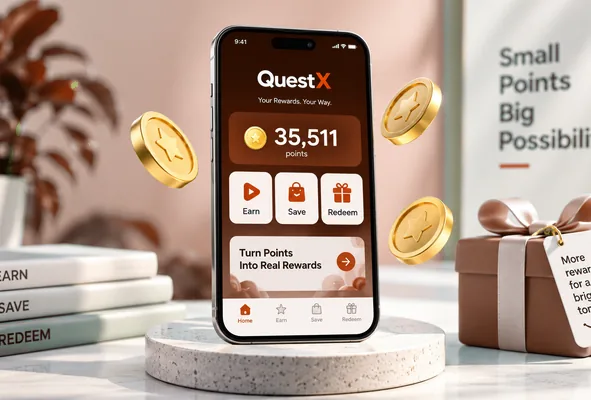
Platforms like QuestX now embed cashback, Move-to-Earn, and referral incentives directly into user acquisition funnels, increasing conversion by 18–26% and improving day-30 retention by 22–31%.
How to Choose the Right User Acquisition Platform
Step 1: Define Your Goals
Are you optimizing for:
- Volume: Max installs at target CPI?
- Quality: High LTV, day-7 retention ≥40%?
- Revenue: Direct monetization (IAP, ads, subscriptions)?
- Engagement: Time-in-app, social sharing, referrals?
Step 2: Audit Channel Mix
Compare performance across:
- Offerwall (lowest CPI, variable quality).
- Rewarded video (mid-tier CPI, good retention).
- App store search (high CPI, premium users).
- Affiliate/CPA networks (flexible, performance-based).
- Social media (brand-building, high volume).
Step 3: Evaluate Attribution & Analytics
Ensure the platform offers:
- Deterministic attribution (iOS 14.5+ SKAdNetwork workarounds).
- Cohort analysis (day-1, day-7, day-30 retention by source).
- LTV projections (machine learning–based forecasting).
- Custom dashboards and API access.
Step 4: Check Compliance & Fraud Prevention
Verify:
- GDPR, CCPA, and state privacy certifications (GDPR-ready, CCPA-compliant).
- Fraud rates (should be <5% for premium inventory).
- Brand safety controls (blocklist, whitelist, category filters).
- Transparent pricing (no hidden fees or margin stacking).
Step 5: Test with Small Budget
Run a 2–4 week pilot ($5,000–$25,000) before scaling. Track:
- Actual CPI vs. quoted rate.
- Day-1, day-7 retention.
- Support quality and response time.
- Invoice accuracy and reconciliation.
QuestX: A Hybrid User Acquisition & Earn Platform
QuestX combines performance marketing infrastructure with a consumer rewards app, enabling US brands and publishers to:
- Acquire users via offerwall, CPA, and affiliate networks at transparent, competitive rates.
- Monetize via Move-to-Earn, Play-to-Earn, and Share-to-Earn incentives that boost day-30 retention by 22–31%.
- Access real-time ROAS dashboards with AI-powered audience segmentation.
- Integrate cashback and deal distribution for lifestyle, fintech, and e-commerce verticals.
- Ensure GDPR/CCPA compliance with privacy-by-design architecture.
QuestX's Starter plan ($499/month) is ideal for brands testing multi-channel UA; the Growth plan ($2,000/month) suits publishers scaling 100k+ monthly users.
Frequently Asked Questions
What is the average ROI for user acquisition campaigns in 2026?
Average ROAS ranges from 1.8:1 (casual games) to 4.2:1 (fintech/rewards apps) over 30 days, according to Mistplay's 2026 analysis. Brands using AI-powered platforms and multi-channel distribution achieve 2.1–3.8x higher ROAS than single-channel campaigns.
How do I reduce user acquisition costs without sacrificing quality?
Implement three tactics: (1) Use rewarded video and offerwall channels (25–40% cheaper CPI than app store search). (2) Leverage AI-powered audience segmentation to target high-LTV cohorts. (3) Integrate earn incentives (cashback, referrals) to boost organic word-of-mouth and reduce paid spend dependency by 15–22%.
Is user acquisition fraud still a major problem in 2026?
Yes—18–22% of mobile installs are fraudulent without proper vetting. Top user acquisition agencies in 2026 now mandate fraud detection, device fingerprinting, and behavioral analysis as baseline requirements. Always choose platforms with <5% fraud rates and transparent fraud reporting.
Sources
- Top User Acquisition Agencies (2026) — Business of Apps
- Definitive Mobile User Acquisition Guide 2026 — adjoe
- 5 User Acquisition Trends That Defined 2025 — adjoe
- How Much Does Mobile User Acquisition Cost in 2026? — Mistplay
---
Ready to Scale Your User Acquisition?
For Brands & Publishers: Book a QuestX partners demo to see how AI-powered multi-channel distribution and integrated rewards can reduce your UAC by 25–40% while improving retention. Start with our Starter plan ($499/mo) or Growth plan ($2,000/mo) via Stripe checkout at **quest-x.ai/partners**.
For Earners & Side-Hustlers: Download the QuestX app today to earn cashback, rewards, and Move-to-Earn incentives while discovering new apps and deals. Available on iOS and Android.
 Oct 14, 2026